


Poet Janet Kaplan begrudgingly returned to Facebook at the height of the COVID-19 pandemic, hoping to stay connected with friends in the poetry community. She was still active on the platform in 2025 when something seemed to fall off a cliff. “Posts and responses…[became] vile,” Janet recalls. “I was particularly pained by the uninformed or misinformed responses to ICE’s capturing of immigrants and its violence against protestors, legal observers, and witnesses. All too many people on Facebook were reacting to the immigrant communities’ suffering and to the violence against peaceful protests with laughing emojis.”
That year, Janet was also invited to read one of her poems for Fall of Freedom, a nationwide, artist-led creative resistance movement organized in defiance of authoritarian forces. There was just one problem. “I was speechless,” she says. “I just couldn’t respond in words—at least not in my own words—to what was taking place: the new administration’s blatant racism and sexism, the challenges to due process and the rule of law, the deliberate erasures and attempts to erase the facts about slavery, and the destabilization of our democracy.”

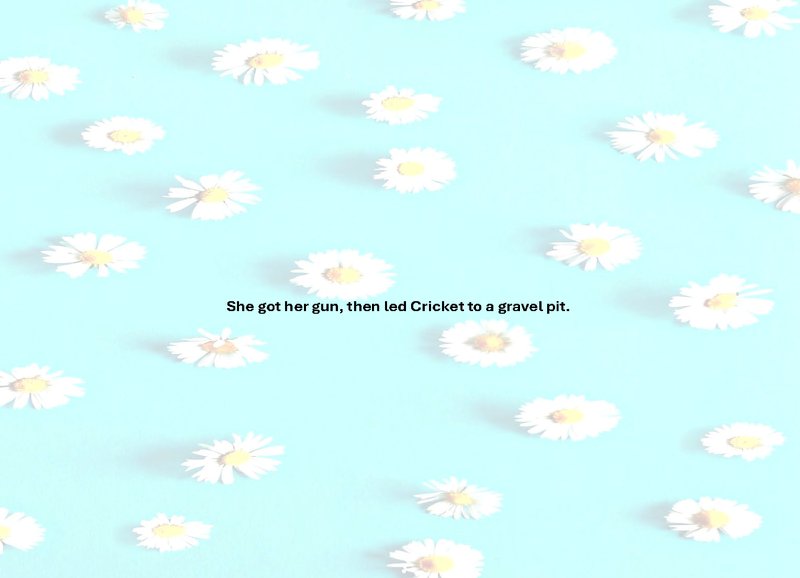
Instead of writing a poem, Janet created four text-based images using inflammatory Facebook posts and quotes from Trump administration officials. Words like: “She got her gun, then led Cricket to a gravel pit.” Ridiculously: “ICE was in my town the other day and I wasn’t worried one bit because I’m not an illegal immigrant and I mow my own lawn and clean my own house.” And, most terrifyingly: “If you raise your voice, I will erase your voice.”
Those pieces, Janet’s first foray into visual art, became the basis for American Scrapbook, an ongoing series of digital montages exploring American life under the Trump administration. “My goal is to present the tension between nostalgia as it’s used by the current administration for an America that never existed, and the facts of American history—racism and exclusion in particular—that are, still and again, our reality.”
Scroll through to read our interview with Janet Kaplan, then view her work in our September 2026 exhibition, The Art of Resistance.

In Today’s Q+Art Interview…
Janet Kaplan discusses the difference between her poetry and visual art practices, shares some of her favorite surrealist poets, and explains why finding a supportive community of like-minded creatives is essential for artists.


How does your artwork differ from your poetry? How are they similar?
Janet Kaplan: At least for now, my artwork is strictly political. My digital montages are an urgent response to the political climate in America. My poems are often political but just as often personal. Sometimes they’re both.
In my poetry, as in my artwork, formal considerations are as important as subject matter. When writing, I consider word choice, rhythm, and the placement of the lines. Sometimes I use fractured lines with phrases spaced across the page in what’s called an open field form. I used an open field form for most of the poems in my books The Glazier’s Country (Fordham U Press) and Ecotones (Black Spring Press Group Ltd.). In Dreamlife of a Philanthropist (U of Notre Dame Press), I used surrealistic juxtapositions so that ideas and actions followed one another in nonlinear or seemingly illogical ways. It’s important to me that each poem be a thing itself: not only an about, but an is.
Which books, art-related or otherwise, belong on every artist’s shelf?
JK: Happily, many poets are influenced by the visual arts and write ekphrastic poetry. For visual artists interested in reverse ekphrasis, I strongly recommend reading the poets of the avant-garde. I particularly recommend Gertrude Stein, John Ashbery, the Argentinian poet Alejandra Pizarnik, Barbara Guest, and Kathleen Frasier, one of the great poets of the feminist avant-garde. I also recommend the work of poets who employ surrealism: Russell Edson, Charles Simic—and me! in Dreamlife of a Philanthropist. Here’s what poet and critic Karla Kelsey wrote in her blurb for that book:
“Dreamlife of a Philanthropist bears echoes of ekphrasis and takes its cue from both the linguistically excitable and fabular lineages of the prose poem. Kaplan challenges the prose poem form by dividing many of her pieces into 14 numbered sections—an unrhymed sonnet riff—or by writing into her titles, ending, rather than beginning, with the thrust of naming. As such, Dreamlife employs the poem-as-object while slyly evading its containment. And the voice here charms, leading us into a landscape of Tender Buttons [by Gertrude Stein] meets Claes Oldenburg or René Magritte.”

What is the best advice you’ve ever received? What’s the worst?
JK: The best advice: Do everything in your power to block the critical voices, inside and out. The worst: If you want to succeed, stay in your lane. Find a style, find a voice, and don’t ever deviate!
What are your biggest barriers to being an artist?
JK: I am my biggest barrier. I put my art last. But I owe myself forgiveness: I’ve had a lot of elder caretaking responsibilities during the last seven years. And I’m contending with lifelong major depressive disorder and panic disorder. When a medication plateaus and stops working, I’m in survival mode. The creative impulse shuts down until the new medication kicks in.


How do you maintain a work/life balance?
JK: I’m no longer in academia, but during the last seven years I’ve had a piled-high plate of elder caregiving. Because of this, and personal health issues, It’s been extraordinarily difficult for me to find the time and the mindset to be imaginative, to create, to work. I can’t offer advice, but I do think that finding a supportive community of artists (or writers) is essential. When I’m not able to work, my community’s there to remind me who I really am.
What are you working on that you’re excited about right now?
JK: I’m very eager to continue work on American Scrapbook. I’m also working on a poetry manuscript titled Fab (for fable and the laundry detergent!) that will incorporate excerpts from historical texts as well as photographs and other images. Fab considers myth, madness, and women’s lives in Jewish medieval Eastern Europe and in my family in mid-twentieth-century America, in a culture suffused with misogyny and misogynistic Disney updates of (misogynistic!) fables and fairy tales.


Janet Kaplan: Website | Instagram
This interview has been edited for length and clarity. All images published with permission of Janet Kaplan; featured artwork: ‘do something, bitch.’ All posts copied from Facebook have been made anonymous.