


In the late 1960s, during the height of the Vietnam War, 17-year-old Jan Rose Kasmir stood before a wall of soldiers with sheathed bayonets at a protest in Washington, D.C., holding a single chrysanthemum. Her image, captured by French photographer Marc Riboud, quickly became a global symbol of peaceful resistance against the world’s most aggressive military power.
Paper artist Jane Ingram Allen thought a lot about Riboud’s photo while developing Guns Into Flowers, a multiphase project created in response to rampant gun violence in American schools. “We are fascinated by guns, but they are deadly,” she says. “The Guns Into Flowers works grew out of a desire to make something positive.”

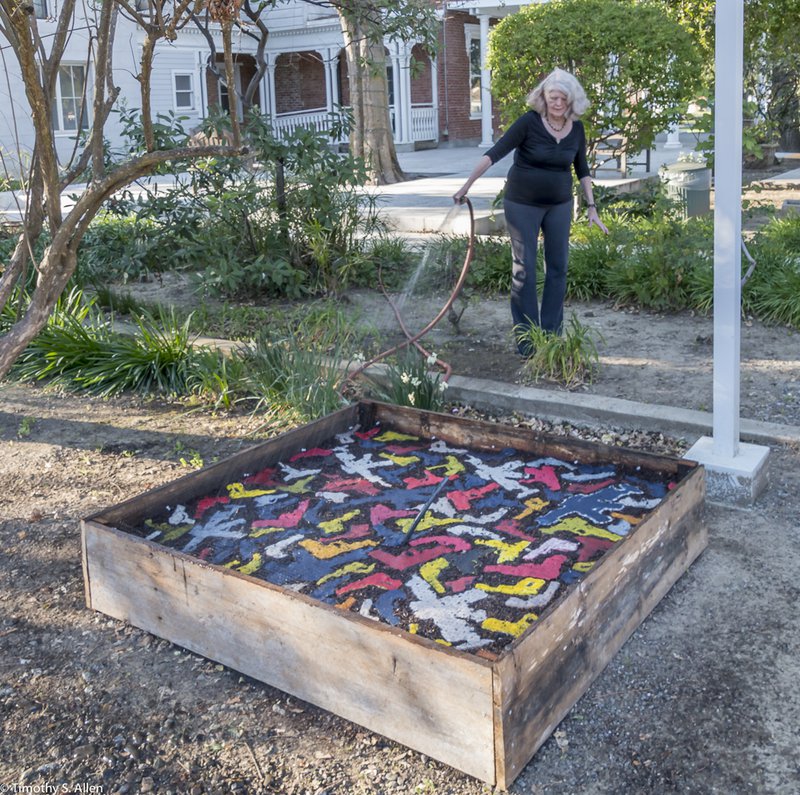
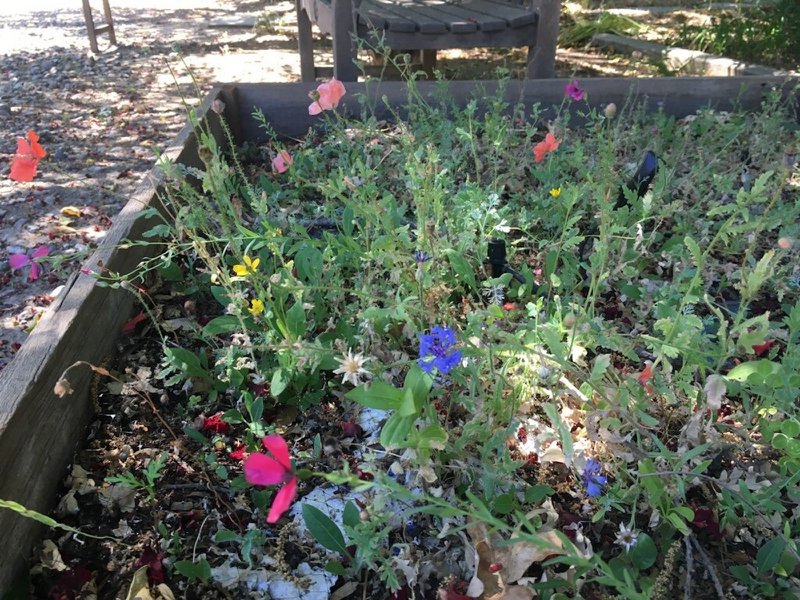
The daughter of a seamstress who “always grew flowers,” Jane brought her idea to the Visual Arts Department at Natomas Charter School in 2019 during an artist residency. There, she and the students created a public art installation: a “flower bed” made from a biodegradable paper quilt patterned with gun shapes and embedded with wildflower seeds. Over time, rain and watering dissolved the paper, and the seeds sprouted and bloomed, transforming the quilt into a living artwork in the same colors and pattern. “The making of art installations that change over time and benefit the environment has become my focus as an artist,” says Jane, who crafts her “living quilts” from branches, vines, seeds, and handmade paper sourced from local plant waste. “Everything changes when placed outdoors because of exposure to the elements and to the processes of nature.”
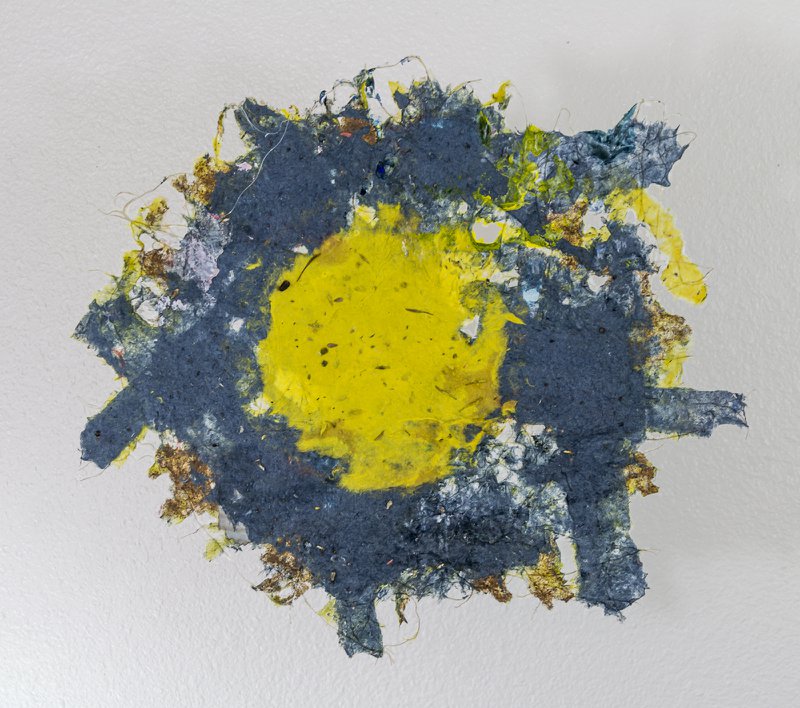
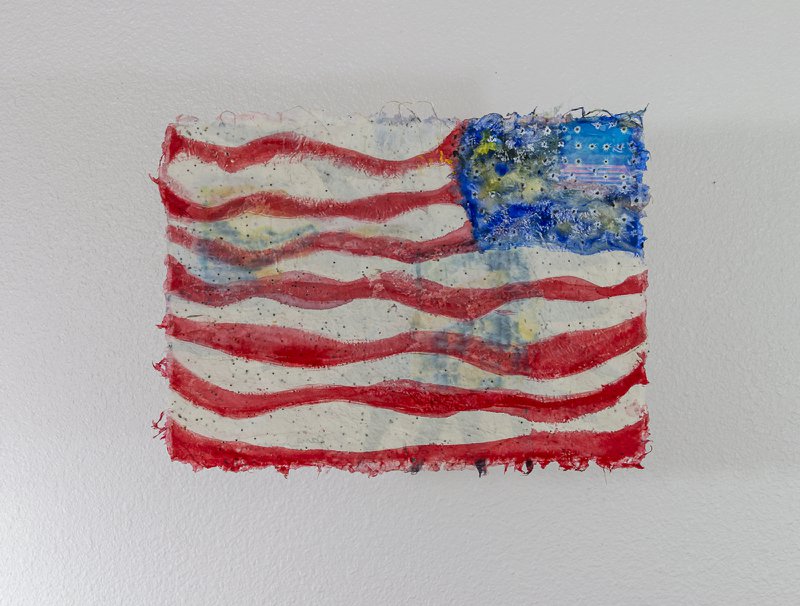
Jane later resurrected Guns Into Flowers as a series of mixed-media collages, one of which appears in our September exhibition, The Art of Resistance. “Seven Children,” a bullet-splat of acrylic paint and thread on handmade paper, expresses Jane’s frustration with escalating gun violence in schools and congressional apathy: “Enough is enough.”

In Today’s Q+Art Interview…
Jane Ingram Allen discusses her book on papermaking in Taiwan, why she views success as a flexible concept, and how making art helps her become a better human being.

Which books, art-related or otherwise, belong on every artist’s shelf?
JIA: I read all the time and majored in English as well as art as an undergraduate. I also like writing and have written poetry and plays and articles for art magazines, catalogs, grants, and many other publications, as well as written one published book, “Made in Taiwan - An American Paper Making Artist’s Journey Around Taiwan,” published in English and Chinese in a small edition by the Taiwan Culture and Art Foundation after my two years as a Fulbright Scholar artist in Taiwan in 2003-04 and 2004-05. I also like photo books, but I read everything from mysteries to science fiction to biographies, history, and art books.
What is the best advice you’ve ever received? What’s the worst?
JIA: Best advice—just do it, keep on making art. Worst advice—move to NYC and go to all the art openings.
What do you dislike about the art world? How would you change it if you could?
JIA: I dislike the common practice of charging artists to review their work and to enter it in competitions. I also wish we valued what artists do more and would pay artists just to be artists.
If you could have dinner with any artist, living or dead, who would it be?
JIA: Probably Jasper Johns or Richard Serra or maybe Ann Hamilton or Eva Hesse.
How do you maintain a work/life balance?
JIA: My family realizes that I am a better mother and better wife if I also make art.
How does your geographical location affect your work and/or success?
JIA: Northern California is far from the art world, and I miss being closer to NYC and other art centers, having lived in New York State for 15 years before going to Taiwan on the Fulbright in 2004, coming back to the US, and settling in Santa Rosa in 2012. California does support craft as art, maybe more than other parts of this country, and I have met many interesting artists here; I still travel back to Taiwan and other parts of the world, and I do art projects in Boston, where my son lives. What is success? Making money from your art, getting famous, having a big exhibition in an important museum?
Success can be just being able to continue doing what you love and inspiring that passion for art in others.
Jane Ingram Allen: Website | Instagram | Facebook
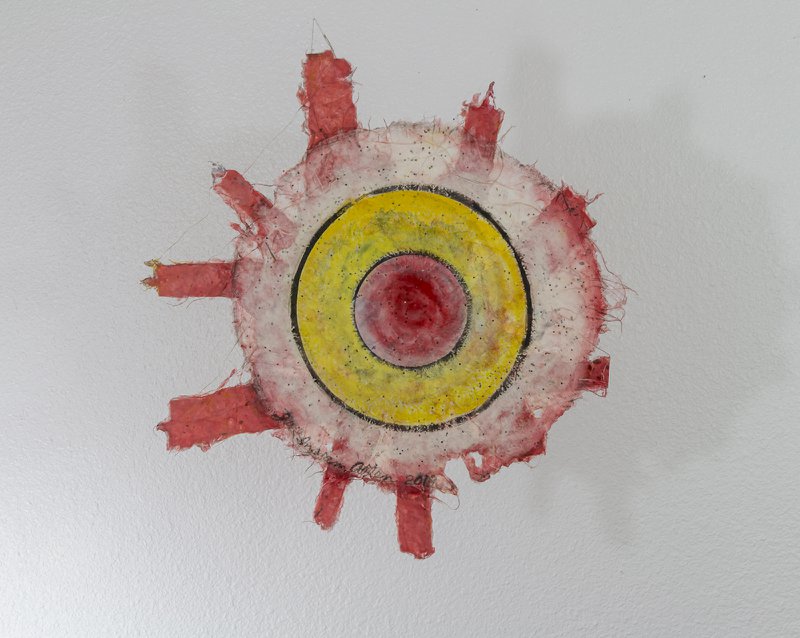
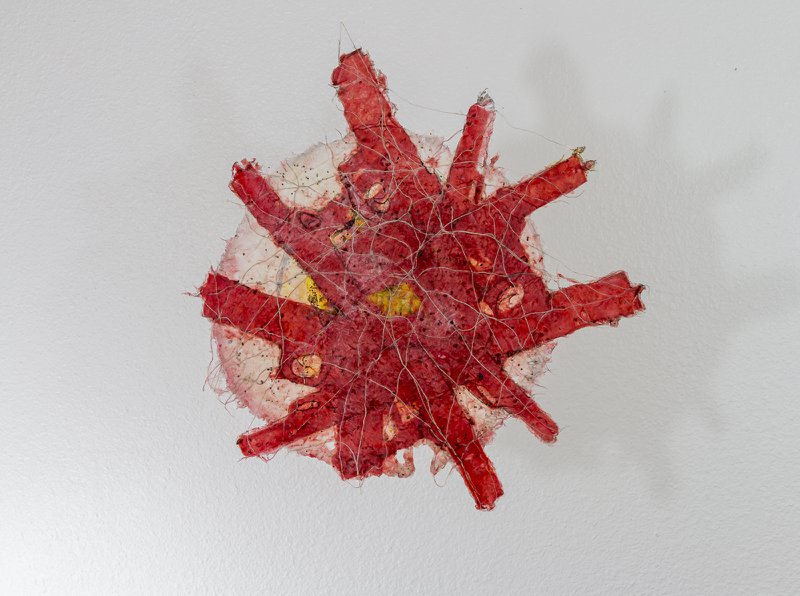
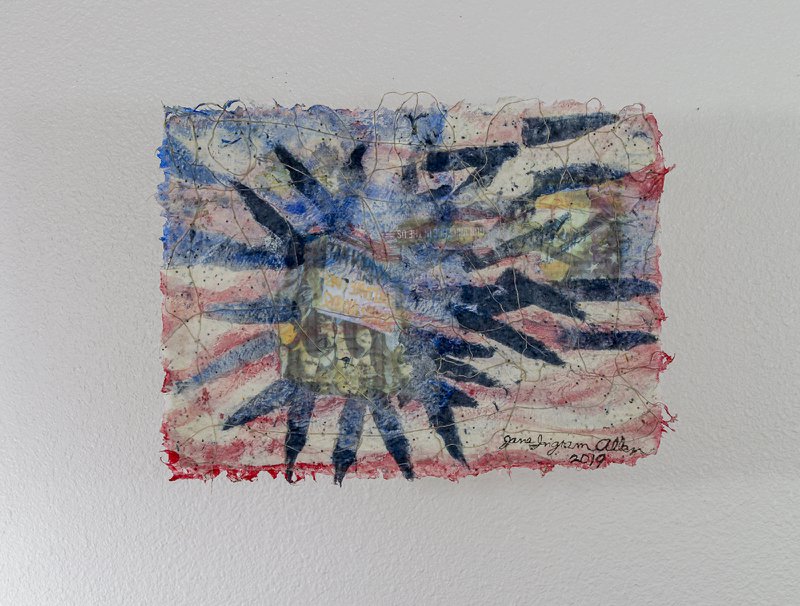
This interview has been edited for content, clarity, and length. All images published with permission of Jane Ingram Allen and photographer Timothy S. Allen; featured artwork: “Yellow Target,” front and back.